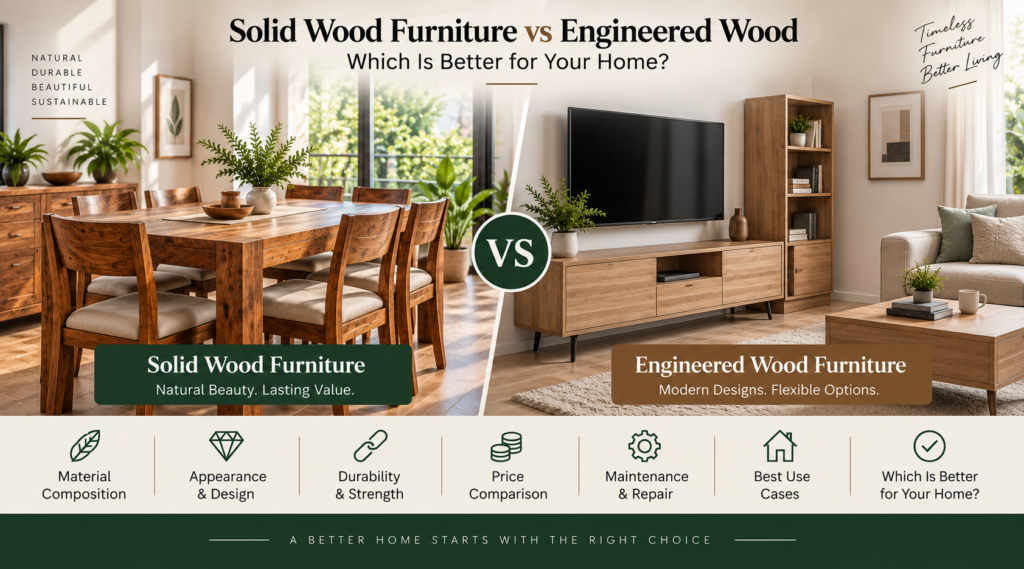
Choosing the right furniture material can make a major difference to your home’s appearance, comfort, durability, and long-term value. When comparing solid wood furniture vs engineered wood, homeowners often want to know which option offers better quality, which one lasts longer, and which material provides better value for money.
Both solid wood and engineered wood have their advantages. The right choice depends on the type of furniture, your budget, room conditions, design preferences, and how you plan to use the furniture.
If you are planning to buy solid wood furniture, comparing these two materials can help you make a more informed decision.
What Is Solid Wood Furniture?
Solid wood furniture is made from natural timber rather than a wood-based composite panel. Depending on the design, manufacturers may use different species such as mango, acacia, sheesham, oak, pine, or ash.
One of the biggest attractions of solid wood furniture for home interiors is its natural appearance. Each piece can have its own grain pattern, knots, colour variation, and texture, giving furniture a distinctive character.
Solid wood is commonly used for dining tables, beds, cabinets, chairs, coffee tables, sideboards, and other statement pieces.
For homeowners looking for natural wood furniture with a substantial appearance and traditional craftsmanship, solid wood can be an excellent option.
What Is Engineered Wood Furniture?
Engineered wood is manufactured by processing wood fibres, particles, strands, or veneers and bonding them into panels. Common examples include plywood, MDF, and particleboard.
Engineered wood furniture can offer advantages in terms of consistency, weight, design flexibility, and affordability. It is widely used in wardrobes, cabinets, shelving, modular furniture, desks, and storage units.
However, engineered wood is not one single material. Different products have different densities, construction methods, finishes, and moisture-resistance levels. Therefore, the quality of engineered wood furniture depends heavily on the specific board, thickness, construction, hardware, and finishing used.
Solid Wood Furniture vs Engineered Wood: Key Differences
| Feature | Solid Wood Furniture | Engineered Wood Furniture |
|---|---|---|
| Material | Natural timber | Manufactured wood panels |
| Appearance | Natural grain and texture | Consistent surface and finish |
| Durability | Generally strong when well-made and maintained | Varies by board type and construction |
| Repairability | Can often be sanded or refinished | Repair options depend on material and damage |
| Weight | Usually heavier | Often lighter |
| Price | Generally higher, depending on wood species | Often more budget-friendly |
| Customisation | Excellent for custom furniture | Good for many modern designs |
| Moisture sensitivity | Can react to humidity and moisture | Depends on board type and grade |
| Best suited for | Premium, traditional and long-term furniture | Modular, storage and budget-conscious furniture |
The comparison shows that there is no universal winner. Instead, each material works better for different requirements.
Is Solid Wood Better Than Engineered Wood?
For homeowners prioritising natural aesthetics, substantial construction, longevity, and the ability to refinish furniture, solid wood is often the preferred choice.
A well-designed solid wood dining table, solid wood bed, or solid wood cabinet can become a long-term part of a home. Natural wood also allows designers and manufacturers to create furniture with different finishes, edge profiles, joinery styles, and customised dimensions.
However, solid wood furniture may cost more because the price depends on the wood species, board quality, furniture size, craftsmanship, finishing, and construction.
Engineered wood can be a practical choice when affordability, uniformity, lightweight construction, or modular designs are more important.
The better option ultimately depends on the furniture piece and how you intend to use it.
When Should You Choose Solid Wood Furniture?
Solid wood furniture can be a particularly good choice for furniture pieces that receive regular use or are intended to become focal points in your home.
Solid Wood Dining Table
A solid wood dining table can create a warm and natural centrepiece for a dining room. Because dining tables experience regular daily use, construction quality and finish are important considerations.
Solid Wood Bed
A solid wood bed can add a substantial, natural look to a bedroom. When selecting one, pay attention to frame construction, joints, wood quality, and finish rather than focusing only on appearance.
Solid Wood Wardrobe and Cabinets
For wardrobes and cabinets, solid wood can provide a premium appearance and strong visual presence. However, construction and hardware remain important because doors, hinges, drawers, and joints experience regular movement.
Natural Wood Furniture
If your interior design focuses on warm textures, visible grain, and an organic appearance, natural wood furniture can complement both traditional and contemporary interiors.
When Is Engineered Wood a Better Choice?
Engineered wood can make sense for homeowners looking for affordable and versatile furniture.
It is frequently used in modular wardrobes, storage systems, shelves, entertainment units, desks, and cabinets where consistent dimensions and panel-based construction are useful.
For some applications, engineered wood furniture can also make it easier to achieve contemporary designs with clean lines and uniform finishes.
If you are comparing solid wood furniture price with engineered wood furniture price, remember that the initial purchase price is only one factor. Construction quality, expected usage, maintenance, finish, and replacement requirements should also be considered.
Which Is More Durable: Solid Wood or Engineered Wood?
Durability depends on more than the material name.
With solid wood furniture, the species of wood, moisture content, joinery, thickness, finishing, and workmanship all influence performance. Good-quality furniture that is properly maintained can remain useful for many years.
Engineered wood can also perform well when the correct board and construction method are used for the intended application. For example, different engineered wood products are designed for different levels of strength and environmental exposure.
Therefore, instead of simply asking whether solid wood or engineered wood is stronger, ask:
- What type of wood or board is being used?
- How thick is the material?
- How is the furniture constructed?
- What type of finish has been applied?
- Is the furniture suitable for the room where it will be used?
- Does the manufacturer provide customisation and quality assurance?
These questions provide a more reliable way to evaluate furniture quality.
Which Wood Is Best for Furniture?
If you decide that solid wood is right for your home, the next question is which wood species to choose.
Mango wood furniture is popular for its distinctive grain and warm appearance. Acacia wood furniture is valued for its natural character and varied grain patterns. Sheesham wood furniture is another established choice for traditional and contemporary interiors.
Oak wood furniture is also widely appreciated for its recognisable grain and versatile appearance, while pine and ash can suit different furniture styles and design requirements.
There is no single best wood for furniture. The right species depends on the furniture type, design, finish, budget, and desired appearance.
How to Choose Solid Wood Furniture for Your Home
Before you buy solid wood furniture, consider these factors:
1. Check the Wood Species
Ask the manufacturer which wood species has been used. Different woods have different colours, grain patterns, characteristics, and price points.
2. Look at Construction Quality
Strong joinery and appropriate construction are just as important as the wood itself. Check corners, joints, drawers, doors, legs, and supporting structures.
3. Consider the Finish
A suitable finish can influence the appearance and maintenance requirements of wooden furniture. Ask about the type of finish and how the furniture should be maintained.
4. Choose the Right Size
Measure your room before ordering furniture. This is particularly important when buying a solid wood dining table, bed, wardrobe, or large cabinet.
5. Consider Custom Furniture
If standard furniture does not fit your room or project requirements, custom solid wood furniture can offer greater flexibility in dimensions, materials, finishes, and design.
Working with an experienced solid wood furniture manufacturer can make the customisation process easier.
Solid Wood Furniture for Modern Homes
Solid wood furniture is not limited to traditional interiors. Modern manufacturers can combine natural timber with contemporary silhouettes, metal, cane, upholstery, and minimalist detailing.
This makes wooden furniture for home interiors suitable for a wide range of styles, from modern and industrial to rustic and contemporary.
A solid wood coffee table can add warmth to a minimalist living room, while a natural wood dining table can become a focal point in an open-plan space.
Why Choose a Professional Furniture Manufacturer?
Whether you are looking for one piece for your home or planning a larger custom furniture project, the manufacturer matters.
A reliable wooden furniture manufacturer in India should be able to provide information about materials, construction, finishing, customisation, and production capabilities.
For buyers looking for premium solid wood furniture, it is useful to review the manufacturer’s product range, wood options, custom furniture capabilities, finishing standards, and previous work before placing an order.
Purewood offers solid wood furniture made using wood varieties including Mango, Acacia, Sheesham, Oak, Pine, and Ash, along with custom-made furniture options. This makes it worth considering when exploring solid wood furniture in India and custom furniture in India.
Final Verdict: Solid Wood or Engineered Wood?
So, which is better?
If your priority is natural appearance, premium craftsmanship, customisation, and furniture designed to become a long-term part of your home, solid wood furniture is often the stronger choice.
If your priority is affordability, lightweight construction, consistent finishes, or modular storage, engineered wood can be a practical alternative.
The best furniture for home use is ultimately the furniture that matches your space, lifestyle, budget, and expectations.
Before you buy solid wood furniture online or from a local manufacturer, compare the wood species, construction quality, finish, dimensions, maintenance requirements, and overall value—not just the price.
FAQs
Is solid wood furniture better than engineered wood?
Solid wood can be preferable for homeowners who value natural materials, visible wood grain, customisation, and substantial furniture construction. Engineered wood can be more practical for certain modular and budget-focused applications.
Is solid wood furniture more expensive?
Solid wood furniture is generally priced higher than many engineered wood alternatives, but the actual solid wood furniture price depends on wood species, dimensions, craftsmanship, construction, finish, and design.
Which wood is best for furniture in India?
Mango, Acacia, Sheesham, Oak, Pine, and Ash are among the wood options used for furniture. The best choice depends on the furniture type, design, budget, and desired appearance.
Can I get custom solid wood furniture?
Yes. Custom solid wood furniture can be designed around specific room dimensions, preferred wood species, finishes, and design requirements. Choosing an experienced furniture manufacturer can help ensure the design is practical as well as attractive.
Should I buy solid wood furniture online?
You can buy solid wood furniture online, but always check the product dimensions, wood species, construction details, finish, care instructions, delivery terms, and manufacturer information before ordering.
How do I choose between solid wood and engineered wood?
Start by identifying how the furniture will be used, your budget, the required durability, desired appearance, room conditions, and whether you need custom dimensions. Then compare the specific materials and construction rather than judging only by the category name.
Conclusion
The choice between solid wood furniture vs engineered wood ultimately comes down to your priorities. Solid wood offers natural character, design flexibility, and a premium feel, while engineered wood provides practical solutions for many modern furniture applications.
For homeowners who want durable wooden furniture, natural textures, and furniture that can become a defining part of their interiors, solid wood is an excellent option to explore.
Choose the material based on the furniture’s purpose, construction quality, design, and long-term value. A well-made piece from a trusted solid wood furniture manufacturer can make your home feel warmer, more personal, and thoughtfully designed.